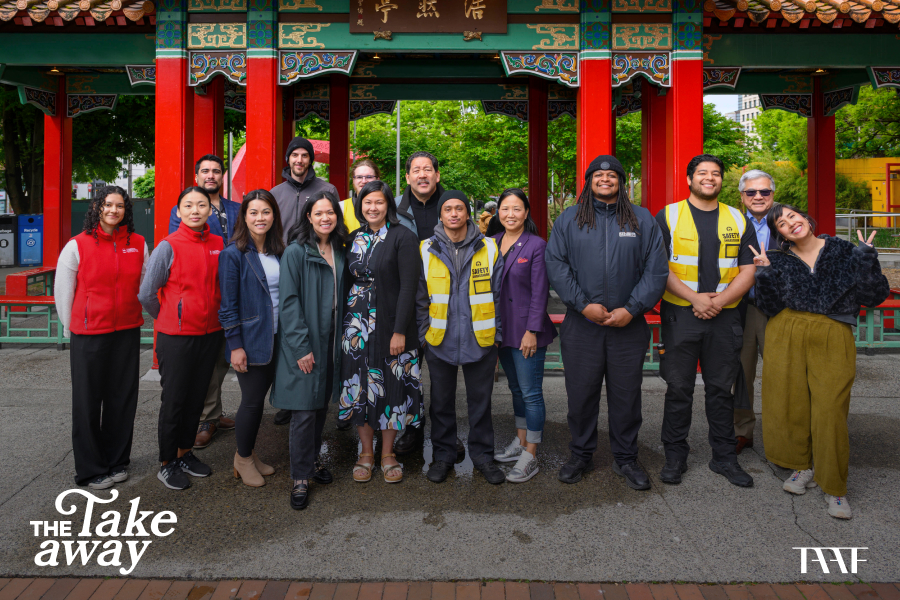

How TAAF Cities is Supporting Seattle’s AAPI Neighborhoods
A Chat with Stakeholders
.png)
In May 2025, The Asian American Foundation (TAAF) announced our “TAAF Cities” initiative, a program focused on deepening TAAF’s impact and supporting safety, belonging, and prosperity for our communities in cities with large Asian American and Pacific Islander (AAPI) populations. We piloted the program in Seattle, a city with historic AAPI roots in addition to being an economic hub. Nine months later, we’re looking at the progress that has been made as a result of the initiative.
A community with urgent safety concerns
TAAF’s 2024 Seattle Safety Study found that many AAPIs in the city didn’t feel safe in everyday spaces, including in their own neighborhoods and on public transit. Nearly 1 in 3 respondents stated that they feared being attacked. Our research helped us identify areas for investment in city infrastructure, and ways we could build on existing community resources that would help make the city safer for the AAPI community.
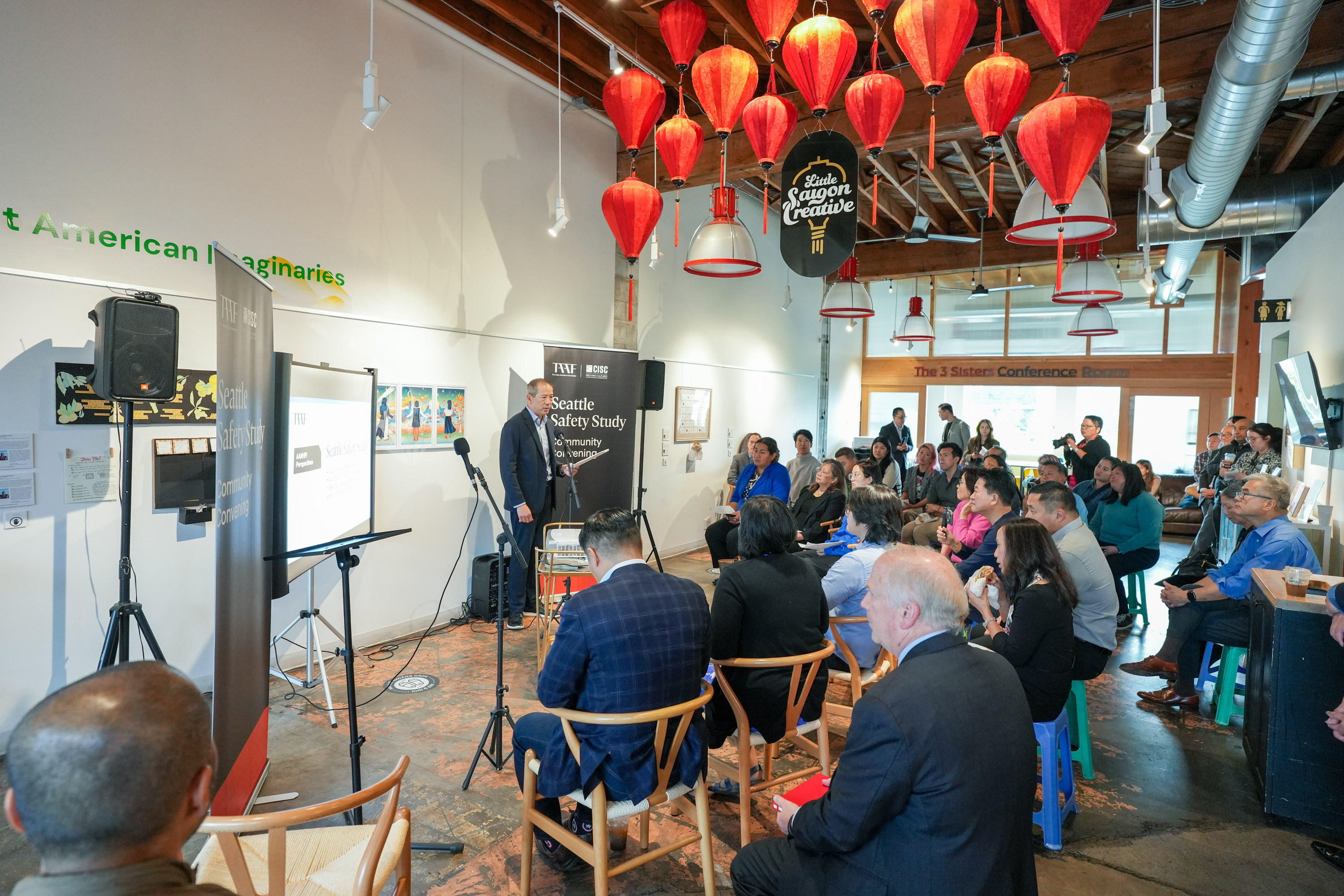
We asked Christopher Yip, Community Safety Manager of the Chinatown-International District Business Improvement Areas (CIDBIA), about what he sees as the community’s most pressing problems.
“In the CID, I would say the most rampant issues that we face are gun violence…[and] the black market drug trade and the sale of illegal goods, and we do definitely have a big fentanyl problem that happens out here as well,” Yip replied. “There hasn't really been a lot of support from the city, whether it's through the police, EMTs, or firefighters.”
Yip explained that in most cases, calls to the police went unheeded unless there was a life-threatening emergency.
Valerie Tran is Interim Executive Director of Friends of Little Sài Gòn (FLS), an organization working to stabilize and improve the Little Saigon neighborhood. She spoke of the urgent needs of the community at large.
“Stabilization of the Little Saigon neighborhood is needed to preserve it as a cultural hub and economic anchor for the city and region,” Tran stressed. “The highly visible safety issues are a symptom of neighborhood decline, stemming from a lack of investment in infrastructure and economic development, and from the loss of anchor institutions…Over the past decade, Little Saigon has deteriorated due to displacement and the loss of key cultural assets, including temples, churches, grocery stores, restaurants, and other small businesses.”

Small businesses are the heart of the CID community, but public safety concerns have hurt business, and caused fear and stress for business owners, employees, and customers. Chera Amlag, of Hood Famous Cafe and Bar, explained.
“I don't want to have to worry that our team, if I'm not here, has to figure out how to get somebody out of the bathroom, whether they're trying to take a shower or shooting up. I mean, these are the realities that literally happen in our business. And so they're very real things on a day-to-day basis that as business owners and as employees that work in this neighborhood that get tacked onto our job descriptions.”
Launching the CID Safety Ambassador Program
In order to address these gaps in public safety, and to provide much-needed support to small business owners in the CID, TAAF Cities: Seattle was launched on June 1, 2025. In partnership with the City of Seattle, Amazon, and the Chinatown-International Business District Improvement Area (CIDBIA), and with a $1 million investment from the City of Seattle and TAAF, the CID Ambassador Program serves Chinatown, Japantown, and Little Saigon. Teams of trained, culturally competent Safety Ambassadors work to improve the day-to-day experiences of all people residing and working in the district. They assist small businesses, welcome visitors, and foster safer and more vibrant neighborhoods.
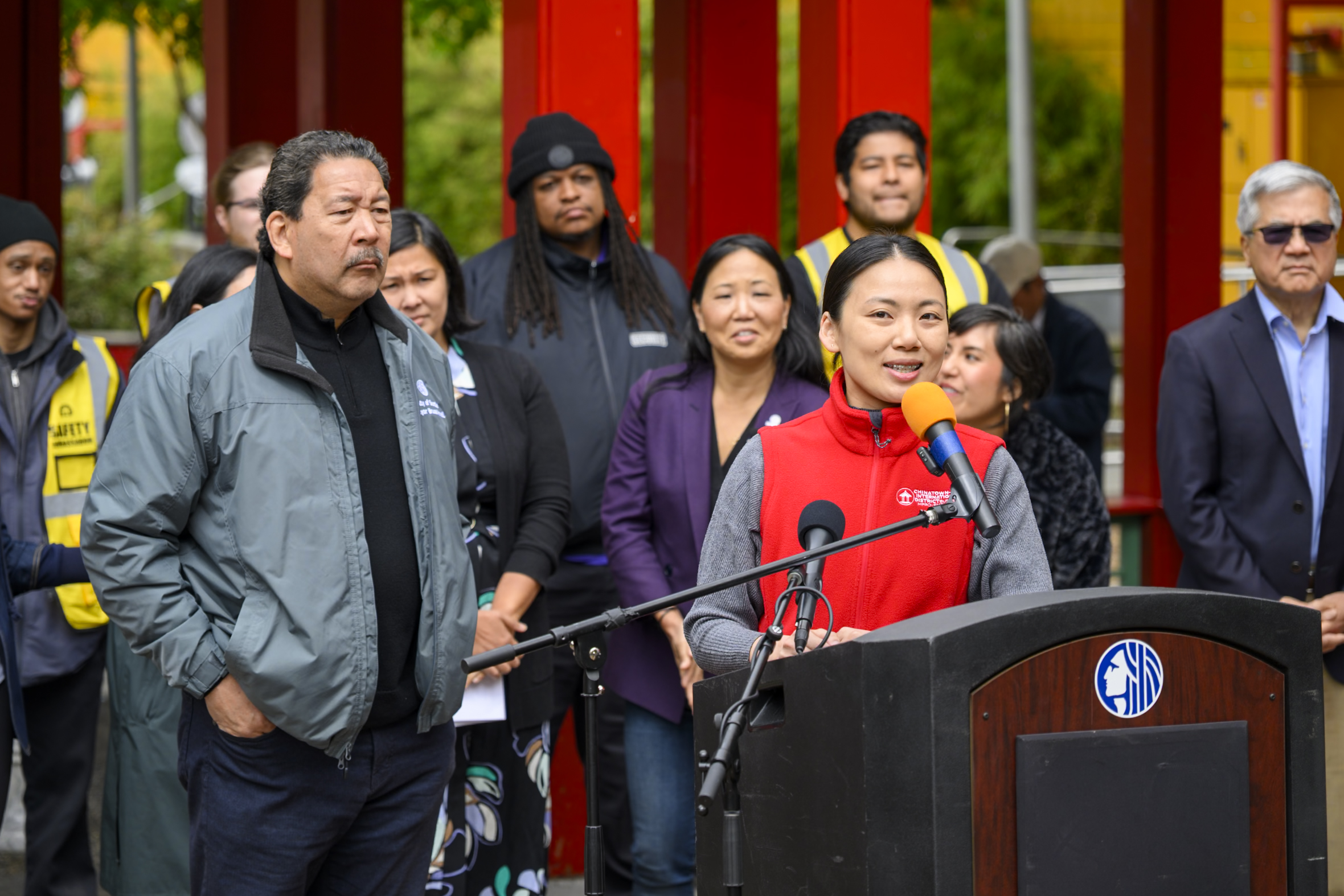
The Safety Ambassadors are licensed, unarmed security guards contracted through Spear Security. They receive training in deescalation, administration of Narcan, and basic first aid. Christopher Yip described some of the situations that the Ambassadors assist with.
“The Safety Ambassadors fill a role of checking in on businesses and residents, making sure that they're okay. Throughout the day there's a handful of businesses that we check in with that we schedule. And we also get calls, texts, and messages through WeChat for any concerns that people have. And when we get the messages, the ambassadors will get the alert and they'll go out and check in on whoever is calling.”
Yip also spoke about the use of “bartering” to deescalate situations.
“A lot of the times the unhoused are really just looking for different resources to get by. Through being able to talk to people, [Safety Ambassadors] are able to find out what their needs are and we try to find them any type of resource that we can,” he explained. “We also work with a couple of partner organizations out here like LEAD and REACH. And through that we're able to get people referred into different programs. And so they are doing outreach, wellness checks, and a lot of the times when they're checking with businesses, they are trying to deescalate situations and help remove people from premises.”
The response so far from the community
The latest CIDBIA Business Owner Safety Survey (June-September 2025) shows that:
- 84% of those who contacted an Ambassador about an incident were satisfied or somewhat satisfied with the handling of the incident.
- 88% of business owners agree that the Ambassador program is improving safety for the Chinatown International District.
In our recent conversations with small business owners in the CID, they explained how the presence of the Safety Ambassadors, as well as the knowledge that they can be counted on to arrive within 5-10 minutes when they call, has made a big difference to their feelings of safety.

Diane Le, one of three sisters who own Phnom Penh Noodle House, spoke about the changes that she has observed.
“I mean, we weren't feeling safe in the neighborhood, even walking around. But today when I walk around and I see the Ambassadors, I'm like, oh, I have someone I can call and text if something feels wrong or something doesn't feel right. And we've had a couple times where we've had to call them and help us out at the restaurant because there is a situation where we didn't know how to approach. We're not trained to talk or confront these situations, and the Ambassadors were there. So just having that immediate resource [where] we know they're here for us, has been a huge comfort.”
Alina Doan, Community Outreach Coordinator at FLS, has also received overwhelmingly positive feedback about the program, noting the warmth of the Ambassadors as they respond to calls in a timely manner.
“During our monthly outreach, business owners have consistently expressed their appreciation for the Ambassadors’ presence during the evening hours. By escorting staff to their vehicles after sunset, the small team of Ambassadors has been integral to the neighborhood’s perception of safety. Most notably, the Safety Ambassadors have received zero complaints regarding response time and have maintained a flawless record of reliability. Overall, businesses feel supported and safer, thanks to a team that has earned the neighborhood’s trust through genuine and warm engagement.”
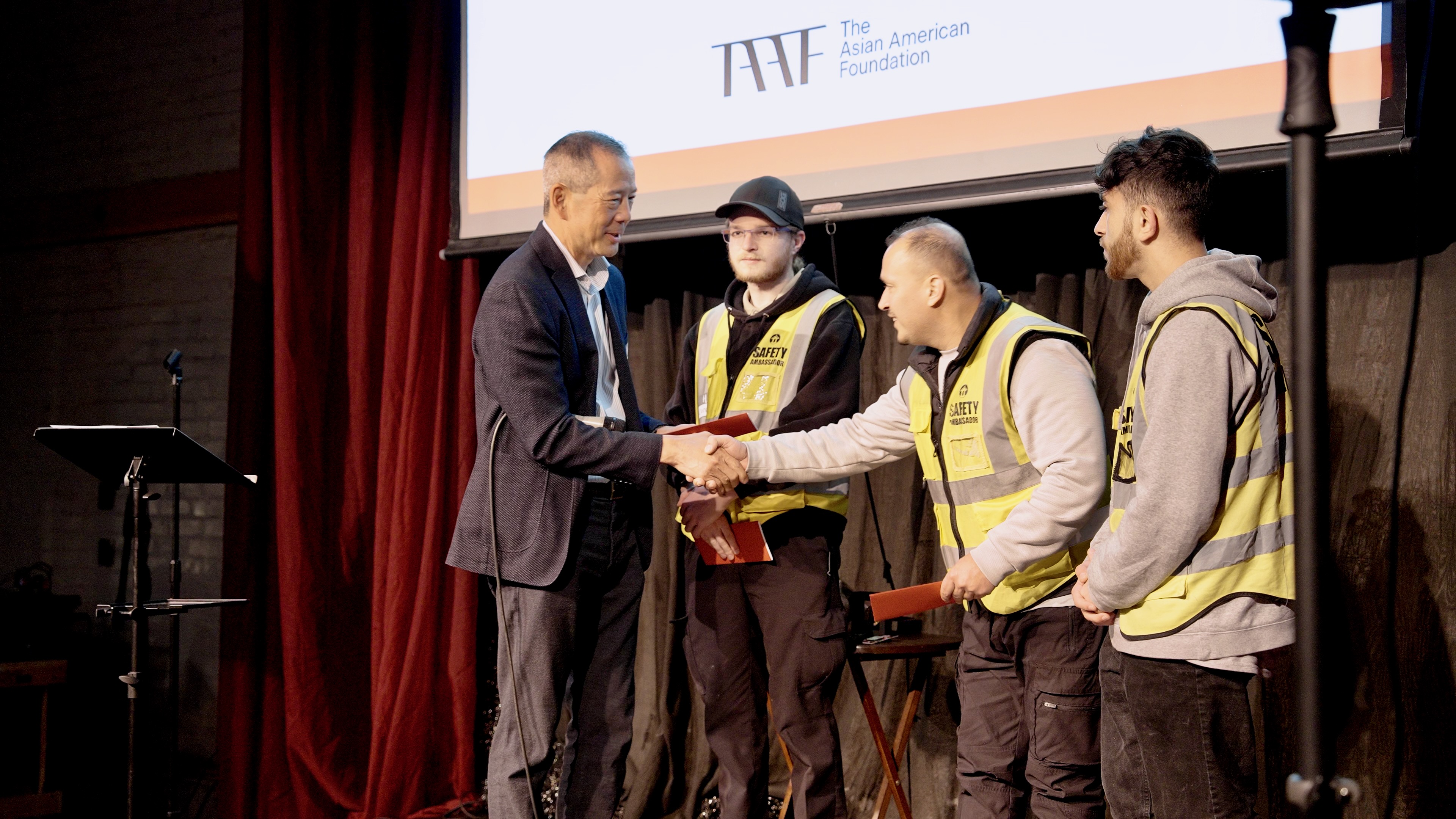
The Ambassador program has brought a sense of safety that was lacking for many in the neighborhood. And it’s the neighborhood as a whole that benefits when small businesses are supported. As Hood Famous’ Chera Amlag put it, “Safety and belonging…is not just for the business owner and for the team, but I think anybody that frequents this neighborhood, because I think that if holistically people feel like they belong and that they're safe, that it's not just a one way thing to us, but it's also a holistic relationship that is just a very human one.”
What’s next
Following the early success of the program, last month the City of Seattle announced an additional $300,000 investment which will expand the Ambassador program to include staff with AAPI language and cultural knowledge, to complement existing safety certifications held by current ambassadors.
In addition, TAAF is supporting the Phố Đẹp (Beautiful Neighborhood) initiative, a community-driven, place-based approach to safety in Little Saigon. This partnership between TAAF and FLS leverages Crime Prevention Through Environmental Design (CPTED) to transform the physical environment by improving visibility and fostering vibrant community engagement. TAAF’s funding specifically accelerates the implementation of infrastructure improvements developed in collaboration with the Seattle Police Department, ranging from public art to small business support. We look forward to sharing updates on this initiative’s impact.
And this month, TAAF announced the launch of TAAF Cities: New York, which is focused on expanding access to affordable capital for entrepreneurs and small businesses across New York City’s five boroughs.
You can learn more about TAAF Cities here, and get all the latest updates from TAAF by signing up for our newsletter.

.jpg)