
Turning Trauma into Leadership: How Mohamed Q. Amin Built the Community of Support That He Never Had
.png)
Mohamed Q. Amin is the Founder and Executive Director of the Caribbean Equality Project (CEP). A TAAF grantee, the Caribbean Equality Project is an organization that serves the intersectional Afro- and Indo-Caribbean and LGBTQ+ communities. We spoke to Amin about his background, what inspired him to start CEP, and what the organization is doing today.
Beginnings
Mohamed Q. Amin, a Guyanese-born, Indo-Caribbean immigrant, came with his family to New York almost 30 years ago. Like many immigrants, his parents wanted to make a better life for their family. But growing up in a single-income household of six people was challenging, and as Amin entered his teen years, he found himself grappling with how to reconcile same-sex attraction with his Muslim identity. “I became really depressed and I started to isolate myself from my family because I thought that I was going to be abandoned, if I were to come out while I was in high school, or I thought that I was going to bring shame upon my family.” After high school, Amin enrolled at LaGuardia Community College. His second day of school was 9/11. “I found myself trying to navigate college as a closeted queer person discovering their queerness in silence, but also as a Muslim immigrant defending my faith against xenophobia and Islamophobia in the classroom.”
Amin eventually moved to Richmond Hill, Queens, and began public and social organizing for the Caribbean communities. At one of these community events, Amin and his family experienced a hate crime. “We survived that incident, but what became painfully clear was that there was nowhere for us to turn—no organizations, no spaces offering emotional support, counseling, legal services, media training, or even guidance on navigating law enforcement. None of that infrastructure existed for Caribbean LGBTQ+ immigrants like me, my family, and our community.”

With no specialized support available—and with only Google search results to rely on—Amin reached out to the New York City Anti-Violence Project. They were able to help his family, and also invited Amin to join a leadership development program. “Through AVP's Speaker Bureau program, I discovered my voice. Despite still healing and living with fear, I was determined not to remain silent and invisible while hate continued to thrive in my community. Recognizing the urgent need for a space dedicated to organizing, advocacy, and healing for Caribbean LGBTQ+ New Yorkers, I took action. After completing the leadership development program, I founded the Caribbean Equality Project (CEP).” CEP launched on June 26, 2015, the same day as the Supreme Court’s final hearing on marriage equality. As an organization, CEP celebrated the landmark win, but was still committed to its mission to represent, advocate, and serve Afro- and Indo-Caribbean, LGBTQ+ immigrants. They’ve continued this work for the past 10 years.
Intersectional Identities and Challenges
The Caribbean is an incredibly diverse region, and the diaspora in New York reflects that diversity. The state is home to the largest foreign-born Caribbean population in the country, many of whom call the Queens neighborhoods of Richmond Hill and South Ozone Park home. But CEP also serves large Caribbean communities in Brooklyn, the Bronx, and even upstate New York. According to Amin, bringing people together across the diaspora was not the difficult part. “For a decade, we have confronted the systems our own Caribbean leaders inherited from colonization, using unapologetic activism and visibility to ensure LGBTQ+ people are never pushed out of the cultural, faith, and institutional spaces built by our communities. We have led and nurtured programs, campaigns, and educational initiatives rooted in cross-racial solidarity, community empowerment, and safety, while responding to harmful immigration policies, food insecurity, and the COVID-19 pandemic. We have been building people power grounded in community and radical love—through mobilization, storytelling, and centering the specific ethnic identities, geographies, and double migrations that define us—lifting up our journeys not only as a source of strength, but as living stories of resistance and resilience.”
Amin himself is Guyanese, a descendant of ancestors from India who were trafficked to the Caribbean through indentureship. There are Indian populations throughout the Caribbean, including Guyana, Suriname, Trinidad and Tobago, and even Jamaica. Since he presents as Indian, people are often surprised to learn that he’s from the Caribbean, or that Indians even live in Guyana. As Amin explains, “Before I’m even acknowledged as a person of value in any space, my identity is put on trial first. My belonging to the AAPI community is routinely erased, and my full, intersectional self is carved up and siloed depending on what is politically relevant in the moment. That erasure mirrors what Afro- and Indo-Caribbean LGBTQ+ people experience every day—when we enter advocacy or organizing rooms, we are pressured to choose between our AAPI, Black, LGBTQ+, faith, or immigrant identities, instead of being allowed to show up as a whole person. There are so few spaces where our transnational stories are centered, where the data, education, health, and economic mobility barriers shaping our lives can be named honestly, and where community-driven solutions can grow from those truths. That is what makes Caribbean Equality Project’s work so vital, and why funders like TAAF have not just resourced us, but helped sustain and amplify a movement that insists our communities—in all their beautiful complexity—deserve to be seen, counted, and invested in.”
Fostering Safety Through Education
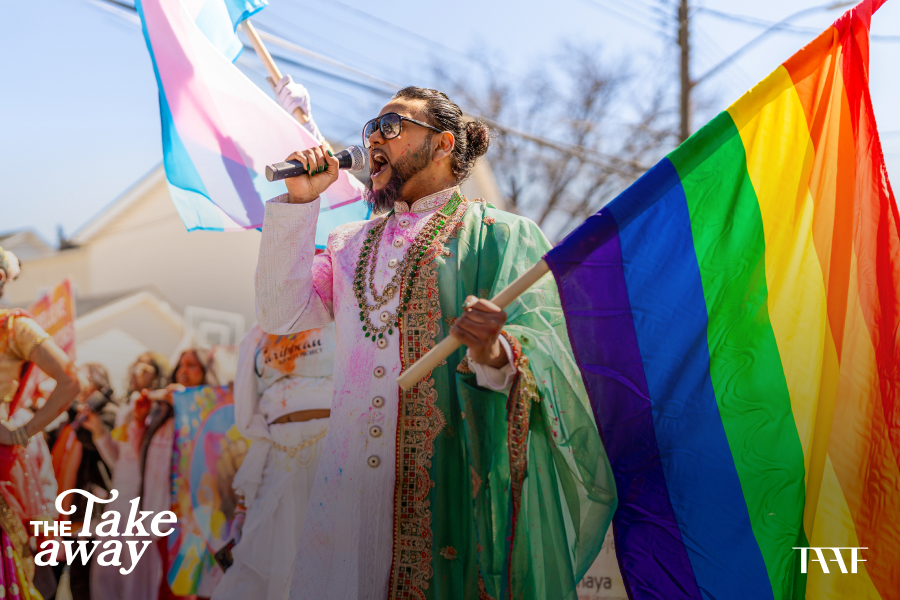
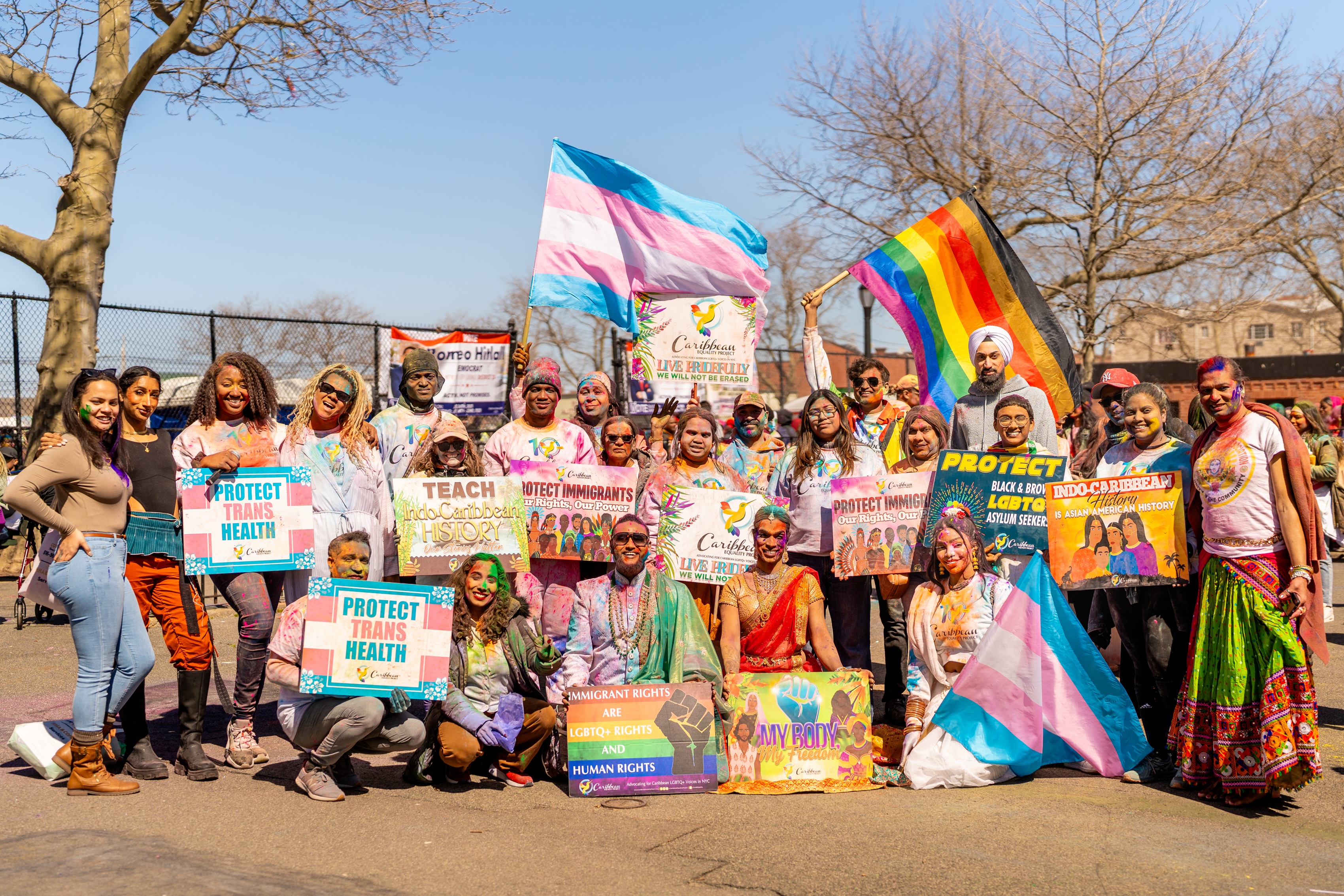
Centering the needs of Afro- and Indo-Caribbean LGBTQ+ immigrant communities, CEP takes a holistic and intersectional approach to support and protect community members. They provide culturally responsive and competent legal services for immigration, asylum, and name change or gender marker changes, helping hundreds of individuals navigate a complex immigration system. In addition, CEP leads the Phagwah Social Justice Collective, which brings LGBTQ+ groups, women's rights groups, gender justice groups, and progressive community-based groups together to march in the nation’s largest Phagwah (as Hindu holiday Holi is known and celebrated in the Caribbean) parade in Richmond Hill. Recently, CEP launched a capital funding campaign to build New York City's first Caribbean LGBTQ+ Center in Richmond Hill—a permanent home for the organization and the communities it serves. The center will provide space for immigration legal services, trans healthcare navigation, emergency relief, food distribution, cultural programming, and community organizing under one roof.
But as Amin realized, in order to advance the work, and to ensure LGBTQ+ Caribbean voices are part of public education, policy, and historical record, “We first have to explain who we are as a community before people even begin to understand the nuances of what it means to be queer and Caribbean, or why an organization like ours needs to exist and be funded.” To address these gaps in understanding, CEP is fostering safety and solidarity through education. The “We Were Always Here” initiative aims to counter cultural erasure, systemic exclusion, and safety threats that stem from historical invisibility. With support from TAAF, CEP is building New York’s first Indo-Caribbean history curriculum for grades K-12. The lessons will focus on different areas of Indo-Caribbean resilience, cultural preservation, and migration trends.
Amin hopes that through education, the community can find pathways to healing and systems change. “How do we talk about cultural and trauma-informed initiatives when people don't know we even exist?”
To learn more about the Caribbean Equality Project, you can visit their website or follow them on Instagram.