
Understanding Emotional Sensitivity: Dr. Sasha Hamdani Takes Us Through Her New Book ‘Too Sensitive’
.png)
If you’ve ever felt your emotions overwhelm you, or if small triggers lead to spiraling self-doubt and shame, you may not just be “overreacting.”
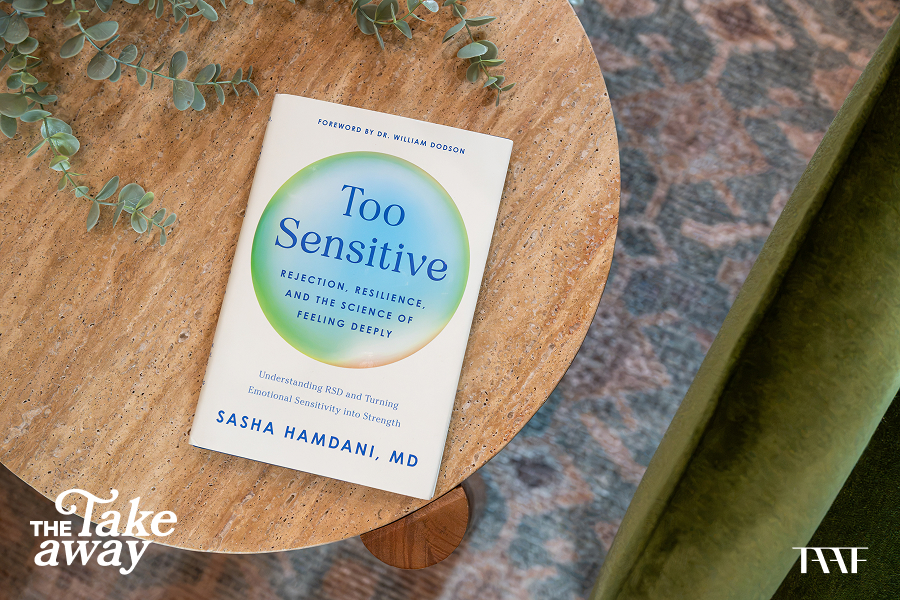
In her new book Too Sensitive, Dr. Sasha Hamdani explains emotional sensitivity and offers guidance for not only how to manage it, but how to turn it into a strength. We spoke to Dr. Hamdani to get a better understanding of Rejection Sensitive Dysphoria (RSD), and how brain chemistry, hormones, and external factors like culture can all play a role in how one experiences emotional sensitivity.

Can you explain what Rejection Sensitive Dysphoria (RSD) is, and how you became involved in studying and treating it?
Rejection Sensitive Dysphoria describes an intense emotional response to real or perceived rejection, criticism, or failure. Someone may intellectually know that a comment or interaction isn't a big deal, but emotionally, their brain and body respond as though the stakes are enormous. I became interested in it because I kept seeing this pattern in my patients with ADHD, and I recognized parts of it in my own experience with ADHD too. It was striking to me that something could be so impairing and so commonly described, yet have so little language or understanding around it.
Importantly, there isn't one universal AAPI experience, but understanding someone's cultural context can help us understand why certain triggers carry so much emotional weight. –Sasha Hamdani, MD
In the book you note that societal and cultural factors can affect the severity of RSD. Can you speak more about how that might manifest in some AAPI environments?
Culture can shape both what we perceive as rejection and how we're allowed to respond to it. In some AAPI families and communities, there can be a strong emphasis on achievement, respect, family expectations, or not disappointing others. (I know a lot of us can relate to this!) For someone who is already sensitive to criticism or perceived failure, those expectations can amplify the emotional stakes of getting something wrong. Importantly, there isn't one universal AAPI experience, but understanding someone's cultural context can help us understand why certain triggers carry so much emotional weight.
The chapter on the “hormonal roller coaster” was fascinating. How can understanding the interplay between hormones and RSD help women in particular?
Estrogen interacts with neurotransmitter systems involved in ADHD, including dopamine, so hormonal fluctuations may affect attention, mood, and emotional regulation. That's one reason some women report feeling more emotionally reactive or having more difficulty managing their ADHD symptoms before their period, postpartum, or during perimenopause. Recognizing those patterns can be useful, because instead of thinking, “Why can I handle this some weeks and completely fall apart during others?” you can start tracking patterns and potentially addressing them with your healthcare provider.
You mention RSD isn’t officially recognized in the The Diagnostic and Statistical Manual of Mental Disorders (DSM). Is the condition well understood and accepted by most therapists, if someone wants to get help with it?
This is where I think we need to be careful with language. RSD is not an official DSM diagnosis, and we don't yet have universally accepted diagnostic criteria or a validated clinical test specifically for RSD (which is way overdue). Emotional dysregulation in ADHD, however, is well represented in the research literature, and many clinicians recognize rejection sensitivity as an important experience even if they don't use the term RSD. So I would look for a clinician who understands ADHD and emotional regulation, rather than focusing solely on whether they treat RSD.
The book includes a really helpful toolkit with real-life scenarios and guidance. What’s the number one thing you hope people learn from this book?
I want people to learn that the goal isn't to stop being sensitive. It's to understand what happens between the trigger and the spiral, because that's where we can actually intervene. If you can recognize your patterns, understand what your nervous system is doing, and have tools for those first few minutes when everything feels enormous, you can still feel deeply without allowing every feeling to determine what you do next.
Too Sensitive is out now at all your favorite booksellers.
Sasha Hamdani, MD, is a board-certified psychiatrist specializing in ADHD, RSD, and emotional regulation. You can follow her on Instagram.