Rucha Kaur reading to elementary school children in Queens, NY
Safety for Sikh Americans Begins With Awareness and Accurate Representation
.png)
As we celebrate Sikh Awareness Month, we’re spotlighting the work of one of TAAF’s amazing community partners, the Sikh Coalition.
The Sikh Coalition was founded after 9/11, when the Sikh American community was targeted with hate and violence due to misconceptions based on their appearance and visible articles of faith, such as turbans. Since then, the Sikh Coalition has grown into a leading civil rights organization doing legal, advocacy, education, and community development work to combat hate and foster racial equity.
Today, Sikh Americans continue to face discrimination, and for many young community members, bullying is a persistent problem. Education is one of the ways that the Sikh Coalition tackles misinformation—or lack of awareness— about Sikhism. In 2024, the Coalition released a landmark report called "Where Are You Really From?", which provided insights and recommendations based on a survey of nearly 2000 Sikh students across the country. Rucha Kaur, Managing Director of Education and Community Development at the Sikh Coalition, elaborated on the importance of this work.
“Our education work is really to ensure that Sikh students stay safe in classrooms. We talk about their experiences in schools, what kind of support they have, what it looks like to be a Sikh student in the United States. The work itself is unsettling because we did find a very high number of Sikh students who go through bullying. But I do also believe that it is an opportunity for Sikh students to tell their own stories and for more Sikh students to talk about who they are, their lived experiences, and really come out the other side with a sense of pride in their identity, and knowing that there are so many students across the country that have similar experiences as well.”

While education and advocacy work takes place year long, Sikh Awareness Month offers the opportunity to not only address misconceptions, but to recognize the contributions of Sikh Americans in US history and culture. As Kaur explained, the Sikh community is not a monolith—like any community, it includes a diversity of people, viewpoints, and levels of practice. And for educators, this month is a great time for kids to learn more about their Sikh classmates. We asked Kaur what she would like people to better understand about Sikhs.
I would just like for folks to know their Sikh neighbors, interact more, and find more opportunities to build bridges across the community as a whole.
“I would love for more kids to know about their Sikh friends, their Sikh classmates,” Kaur shared. “To better understand why they may look different, what their articles of faith stand for. And in general, I would just like for folks to know their Sikh neighbors, interact more, and find more opportunities to build bridges across the community as a whole.”
TAAF has worked with the Sikh Coalition since TAAF’s own founding. Just as the Sikh Coalition was born in response to 9/11, TAAF was formed in 2021 to combat the rise in anti-Asian hate and discrimination during the pandemic. And five years on, we asked Kaur to reflect on the organizations’ partnership thus far.
“TAAF has been such a wonderful partner— both in education and in our anti-hate work. One of the things that I really value in our experience of working with TAAF has been this opportunity to talk to other organizations about our rapid response work. It has really allowed us to look at how we are responding to hate, how we are responding in real time, and to develop best practices in that process.”
“On the education side, I've really appreciated connecting with partners across the country,” Kaur continued. “I've learned that education is really where a lot of ideas and ideologies are emerging, and just having the opportunity to learn from other organizations, how they may be working on educator outreach, how they may be working on getting more people to understand AANHPI history, and how we are getting more people involved in just basic outreach and understanding.”
When asked about her hopes for the next five years ahead, Kaur responded, “We always say that we would love to put ourselves out of business. But I do strongly feel that the only way to move forward is to move forward together. I think having strong allies and strong partnerships is really important. So I would love to see us continue to build that community where we're learning from each other and standing by each other and moving forward together.”
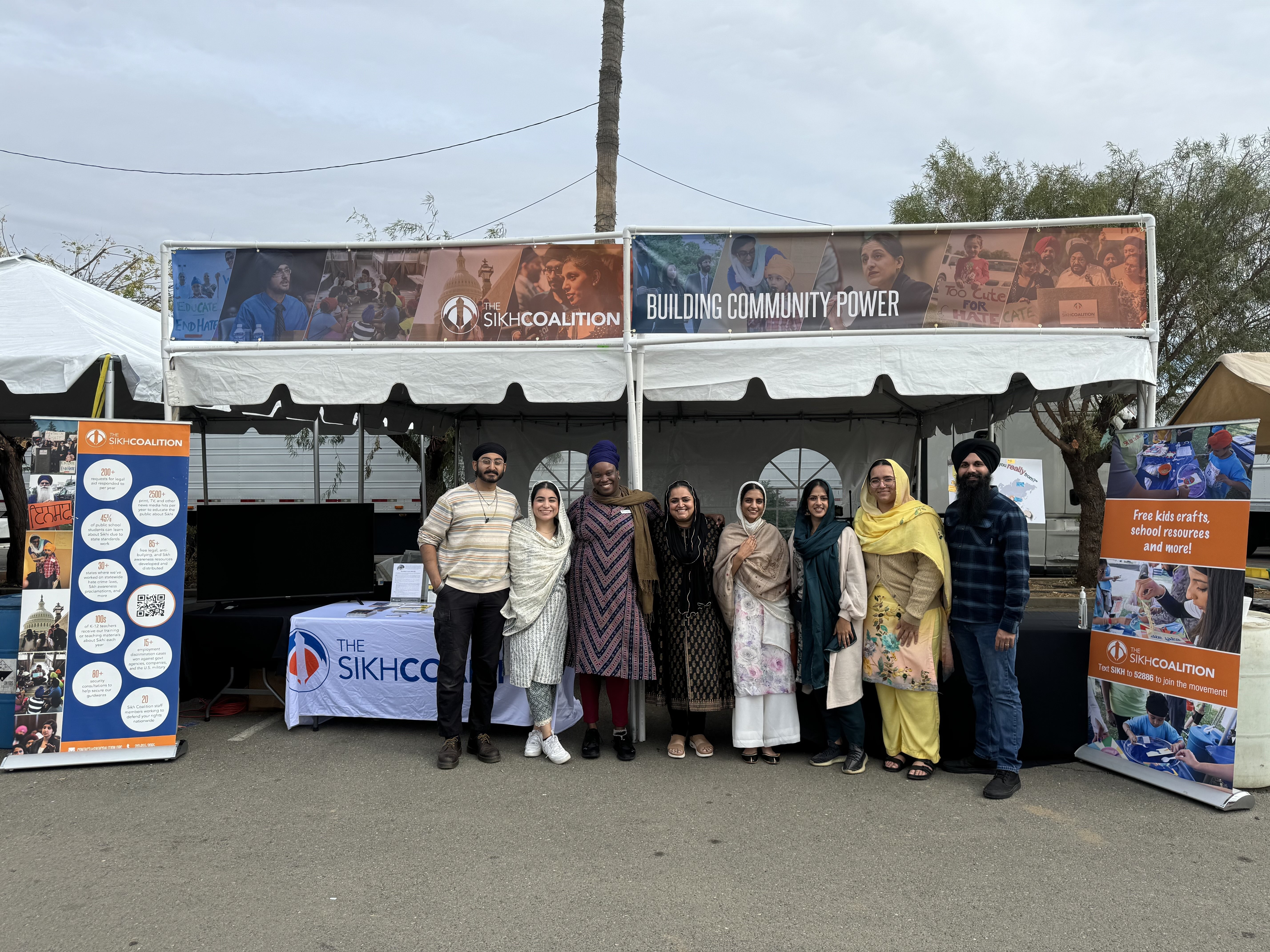
To learn more about Sikhism and for educational materials, you can check out the Sikh Coalition’s resources below:
- About Sikhs
- Resources for K-12 Educators
- ”Where Are You Really From?” A National Sikh School Climate Report
For more information on the organization, or to connect on corporate or classroom trainings, please reach out to education@sikhcoalition.org