
Five Years of Partnership on Community Healing: An Interview with Asian Health Services’ Ben Wang

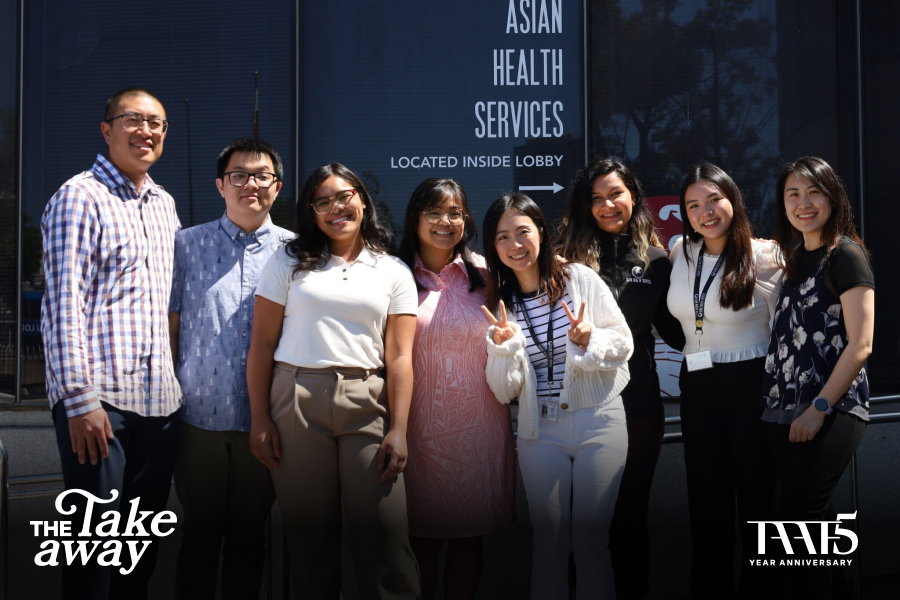
We sat down with one of our original grantees, Asian Health Services, to take a closer look at their work and what this partnership with TAAF has meant for their impact over the past five years.
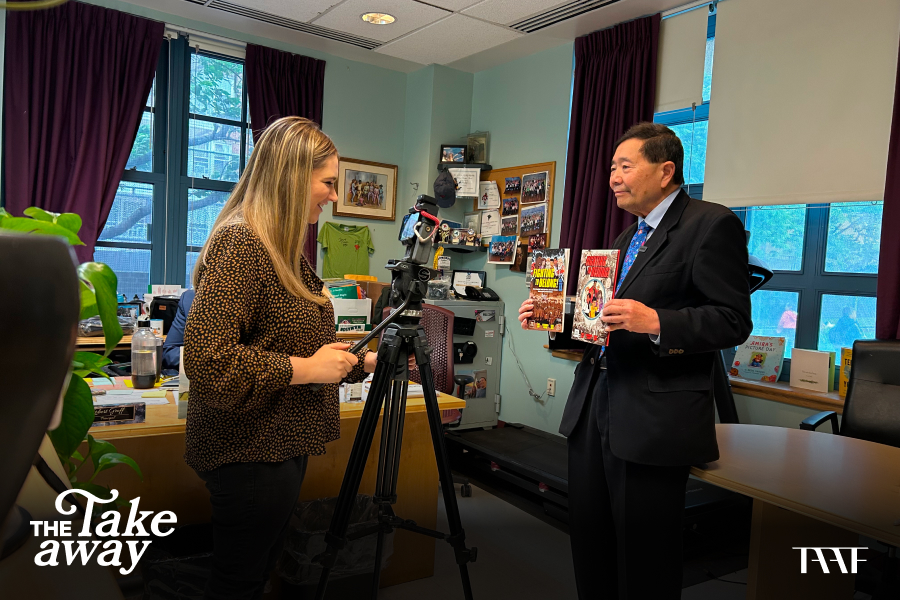
TAAF was founded in 2021 in response to the wave of anti-Asian hate and violence during the COVID-19 pandemic. Asian Health Services (AHS) was an early partner in what would become TAAF’s Safety National Network, made up of leading organizations confronting hate, supporting survivors, and building lasting safety. A community health center based in Oakland, CA, AHS provides medical, dental, and behavioral health services to more than 50,000 patients in 14 languages throughout Alameda County. We chatted with AHS Special Initiatives Director Ben Wang about how TAAF and AHS have supported survivors in the AAPI community.
Tell me about your role at AHS.
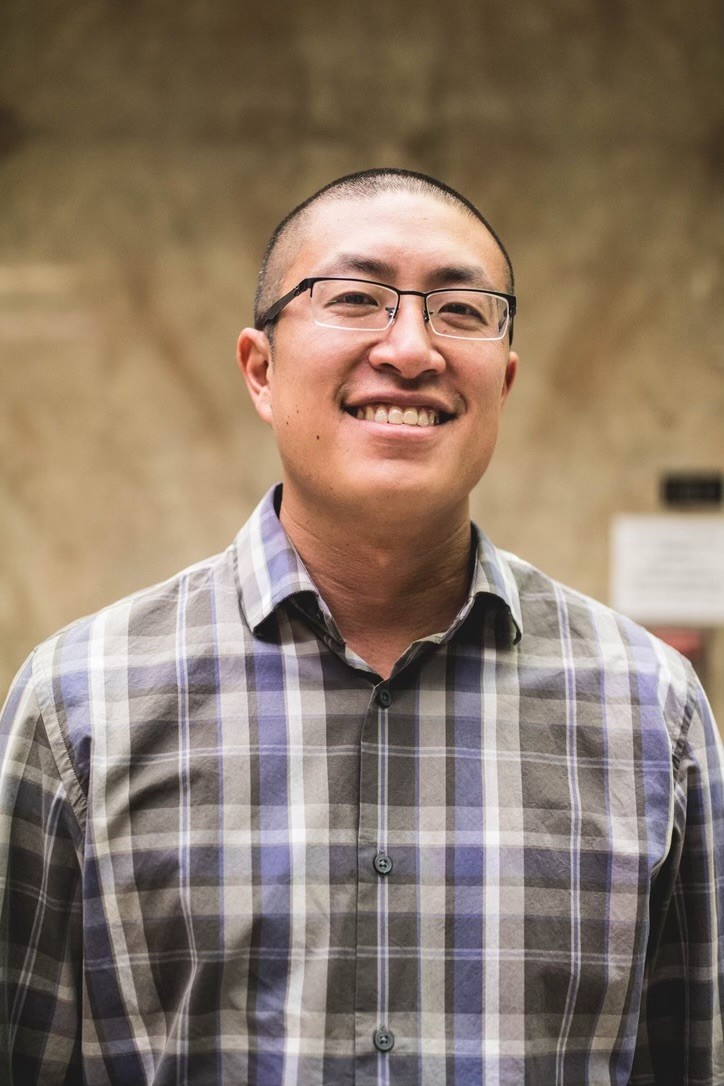
I am the Special Initiatives Director and I oversee our Community Healing Unit, which has been funded by TAAF. Our Community Healing Unit provides holistic healing support for survivors of hate, crime, and violence. So what this looks like is we have lay mental health counselors who are bilingual, and they're the ones who are able to build trust and rapport with the survivors who come to our program. We're also able to offer acupuncture and massage therapy, emergency financial assistance, emergency food deliveries—really just trying to meet our community members where they're at, and also to reduce the stigma regarding mental health therapy through these culturally appropriate strategies.
Our Community Healing Unit has served about 450 individuals since the formation almost five years ago. We've seen many types of cases from hate crimes and incidents to gun violence, homicide cases, domestic violence, robberies, assaults, elder abuse—really many types of violence. So many of our community members were falling through the cracks. There are victim service programs in Oakland, but oftentimes our community members wouldn't qualify or there'd be different eligibility restrictions, there'd be language and cultural barriers, lack of trust and rapport. So the 450 individuals that we've been able to serve in the short amount of time, I think really wouldn't have had other options in most cases.
Are they referred to AHS? How do they get connected with you?
Yeah, so we do receive referrals. We are part of a violence prevention network in Oakland. We've had good referral relationships with the Oakland Police Department victim liaison, the District Attorney's victim advocates, but I believe the number one referral system is through our primary care system. Since Asian Health Services is providing primary care to almost 50,000 patients, oftentimes the patients, even if they don't report the crime or the incident, they come in for their doctor's appointment at AHS and they have a good relationship with the doctor. They may disclose, and then the primary care doc will make an internal referral to our program. And that's the most holistic way we're able to communicate, as an integrated team—our lay counselors with the primary care docs. We share a patient record system with them, we'll coordinate with the mental health side of things. And then word of mouth as well—we have a warm line that anyone can call and we are able to offer them support in a more rapid response way than other programs, since we don't require that you become a patient at Asian Health Services. We're open to the community. Anyone, regardless of insurance status, can go to another doctor even, that's okay. So the primary care providers, some of the government partners, other CBOs, those are some of the main referral sources.
Can you tell me a little bit more about the lay counseling approach to mental health and how that works?
Our lay mental health counseling is a relatively newer model where we send basically all of our community health worker staff. They're the core team members that are providing direct services in this program. So they're non-licensed, they don't have LCSW, ASW background, but they're strong communicators, they're empathetic, they have bilingual language and cultural skills. It's not for everybody, but for those that we know are effective at providing, they're already providing some level of this care, we send them to a lay counselor academy that's run by a partner organization [Lay Counselor Academy]. They receive 65 hours of pretty intensive training. They're receiving a lot of the education that goes into other types of mental health therapy. So they're learning about CBT, they're learning about trauma informed care, they're learning about motivational interviewing and the techniques that are needed to really counsel someone and provide emotional support in a way that's suited for our immigrant population.
So there's a lot of practice and hands-on training involved. We don't just send folks to training and then send them out into the world without any support. They continue to receive ongoing training and we have case consults, we have clinical supervision, similar to the type of support that other mental health therapists go through in terms of clinical supervision, case consults, care coordination.
What's the benefit to community members to having a lay counselor working with them? Is it better access? Less stigma?
Yeah, those two are very important. We're able to reduce stigma oftentimes because it can be a more approachable intervention. Often when people are going through crisis, they're very busy, they maybe have had different experiences with mental health care. And we still offer mental health therapy from a clinician, and that's very important in a lot of cases, but we wanted to have an intervention where even if they said, "No, I don't want to talk to a therapist right now," the lay counselor would help them on the navigation side. So a common example would be a client who comes in with a lot of trauma, they say, "No, I don't want to talk to a therapist right now, but I will accept a massage therapy appointment. I will accept some food vouchers. I will accept the help with applying for the victim compensation funds."
We're dealing with a shortage of mental health clinicians, especially for Asian languages. So even if the stigma didn't exist, even if every one of our clients said, "Yes, I want to speak to a counselor, but I speak Korean or I speak Cantonese," we wouldn't be able to provide the care because there's not enough because of that shortage. So by necessity, we had to train folks up.
And so over time, the lay counselor is meeting with them, counseling them during the navigation experience. They might be asking them how they're sleeping. Are they eating enough? Are they socializing? Are they able to go out outside their home? Do they feel safe? And so I think what we've found is that oftentimes the clients do start to open up and share about what they're going through in a more organic way than a scheduled therapy appointment. And so it's kind of an entry point, and we have found that folks are more likely to accept higher level care, mental health therapy later on. So we just wanted an opportunity where even if someone declined, that we're still engaging them in a trauma-informed way.
And then the other point that you did mention is in terms of access. We're dealing with a shortage of mental health clinicians, especially for Asian languages. So even if the stigma didn't exist, even if every one of our clients said, "Yes, I want to speak to a counselor, but I speak Korean or I speak Cantonese," we wouldn't be able to provide the care because there's not enough because of that shortage. So by necessity, we had to train folks up. We had to train our bilingual staff around these skills. And access-wise, in our program, participants are able to receive access to lay counseling within 48 hours of case assignment compared to waiting months just because there's just not enough clinician slots.
What do you see as the greatest challenges that the Asian American community members face when they're seeking and trying to obtain care?
I think, first and foremost, we have seen a lot of folks just going through so much trauma, especially with some of the gun violence cases, homicide cases. It’s just really tough, not only on the individual, but for the whole family. And then also, we're primarily working with clients from communities and families who've also gone through intergenerational trauma and histories of war and genocide and forced migrations and discrimination on a really systemic level. So dealing with the trauma that comes up in the present day can be compounded by historical trauma. It can be bringing up other issues that may still be unresolved for some individuals or families.
We've had very, very violent cases where we're trying to support the children of the individual. We're trying to support the aunts and uncles, the parents, the grandparents of a single family who had a lot of what I described with a lot of recent trauma, but also past trauma and a lot of layers to try to support. But that’s the beauty of the bilingual counselor approach. If we weren't providing that type of care, we've seen families fall through the cracks of the traditional systems in place due to language and culture, but also lack of trust or stigma, lack of access. I think it's all those things combined.

Are there some other ways that you address the stigma aside from the lay counselor program itself?
Yeah, so in addition to lay counseling, which is primarily more one-on-one, we wanted to have some models where there was more group support and there's kind of an element of community healing and getting out more into the community. So there have been a couple different iterations. What it's looked like in the past 12 months is we've held weekly, what we call “holistic healing” sessions every Friday. Every Friday morning there is a group of predominantly Chinese elders—we've had other ages and racial and ethnic participants as well, but it is facilitated in Chinese primarily—many of whom have also gone through violence and discrimination and hate.
And so there are three main themes of healing. #1 is around food. There's a series of cooking classes. We've had cultural food exchanges, so Chinese folks going to visit one of our partner organizations in the Cambodian community, the Eritrean community, and some of our Black community member partners. We've had food exchanges, learning about the history of different cultures, food, also how food is medicine, food is healing. #2 is around movement. So we've gone on hikes, gone on walks, done Tai Chi, yoga, qigong. Movement is a very important kind of healing practice. #3 is music or song. We've had taiko drumming demos and they learn to drum West African drumming. We've had different singing and sound healing.
We've done those sessions at a cultural center in Chinatown, but we also bring folks about once a month on a field trip. We brought them to Angel Island to learn about the history of immigration and those struggles. We brought them to Sacramento for a lobby day that has a leadership development component. We've gone all around Oakland, we’ve gone to two high schools. They really appreciated getting to talk with young people through interpretation, and to actually hear their struggles, hear about what they're going through. They don't have those opportunities as much—whenever they see young people on the news or on social media, in Oakland especially, it's usually a very negative portrayal. And so they've had a chance to actually build a relationship, to get to know what some of these youth of color in Oakland are actually doing to try to improve Oakland for everyone.
Are the elders also sharing their experiences?
Yeah, exactly. So in one session with a Lunar New Year and Black History Month theme, the elders shared a little bit about their migration experience to Oakland and about Lunar New Year, and then a Black student union from a local high school shared about Black History Month. They shared about their family’s history in Oakland, and some of the struggles…about what it's like to be young in Oakland these days. So for some of the folks who have experienced recent trauma and violence, they've shared that these opportunities actually were a big part of their own healing process where now they're being very active by coming out to these sessions, and they share that they're not as fearful because they have this type of support.
This is in contrast to a lot of folks without group or community support, who may be very socially isolated and not go outside because it's too dangerous. And that can cause a lot of continued trauma even years after a violent incident. So we really saw this as an opportunity to try to bring them into a safe and supportive space, and get out there in the community. Now, some of these participants are patient leaders, and they're testifying in Sacramento at our county supervisor meetings. We had a patient general meeting with 900 people, and one of these patient leaders went up on stage and spoke in Chinese. She shared about her experience in this healing program, and that was a really powerful moment to witness and see the progression for folks who've gone through a lot. So we think of hate or crime survivors as being these victims, but really through empowerment and leadership, they are our community leaders more than anything.
TAAF was very impactful to partner with AHS as a funder and as a thought partner, and really helped us to be in a position to leverage and receive additional funding.
That's great. And finally, looking back on five years, how has your partnership with TAAF impacted Asian Health Services’ work?
TAAF was our first funder for this type of work. It was a new area for Asian Health. We have a lot of health focused, clinic focused programs, and it took a lot of effort and work to establish, at that time, an action center to support survivors of hate. TAAF was very impactful to partner with AHS as a funder and as a thought partner, and really helped us to be in a position to leverage and receive additional funding. Thanks to TAAF, we were in a position to leverage over $25 million. Through the state of California, AHS was selected as a regional lead for the Stop the Hate program. So we've distributed over $25 million to community organizations in the Bay Area and the Central Coast doing anti-hate work, and we've been able to provide a lot of capacity building, coordination, and addressing systems change around hate and violence prevention. That's one of the ways that the initial TAAF grants were very impactful for us—to build up an infrastructure, to be in a position to serve as the regional lead, to implement successfully.
And then in the recent California state budget, even during a very, very tough budget year, we fought for—and it was included—$30 million of additional funding in the recent state budget. So we're continuing to work on that. It hasn't ended, thankfully. And we do really think that a lot of the community healing, community-based lay counseling, these are models that we would love to expand. We would love to see them replicated in some way, because when we talk about healing or healthcare, it's always more than just a doctor visit. It's more than just a mental health therapy visit. It has to be a community-wide effort, and so this is what we've been able to do with the TAAF grants.
To learn more about Asian Health Services, visit their website or follow them on Instagram.