
TAAF Q&AAPI: Peyton Elizabeth Lee

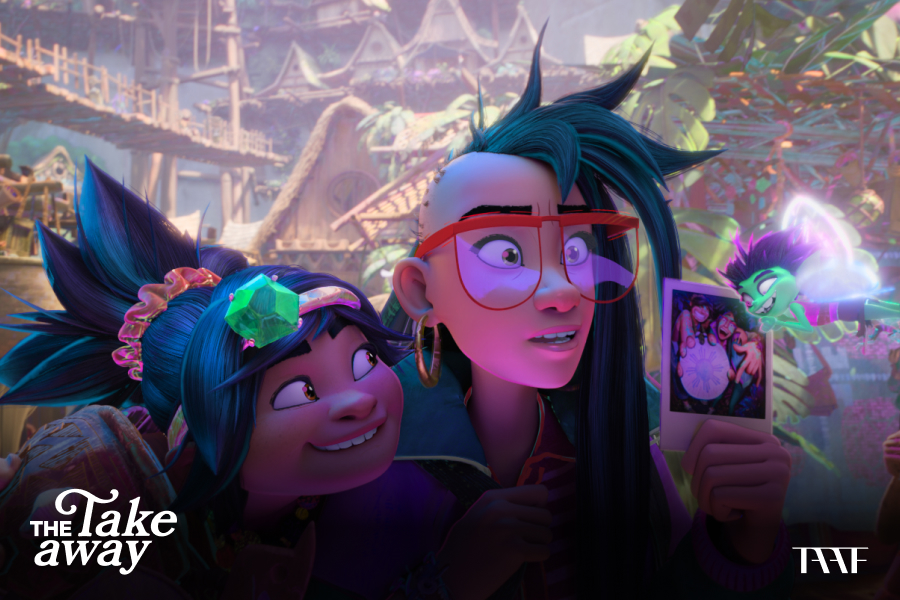
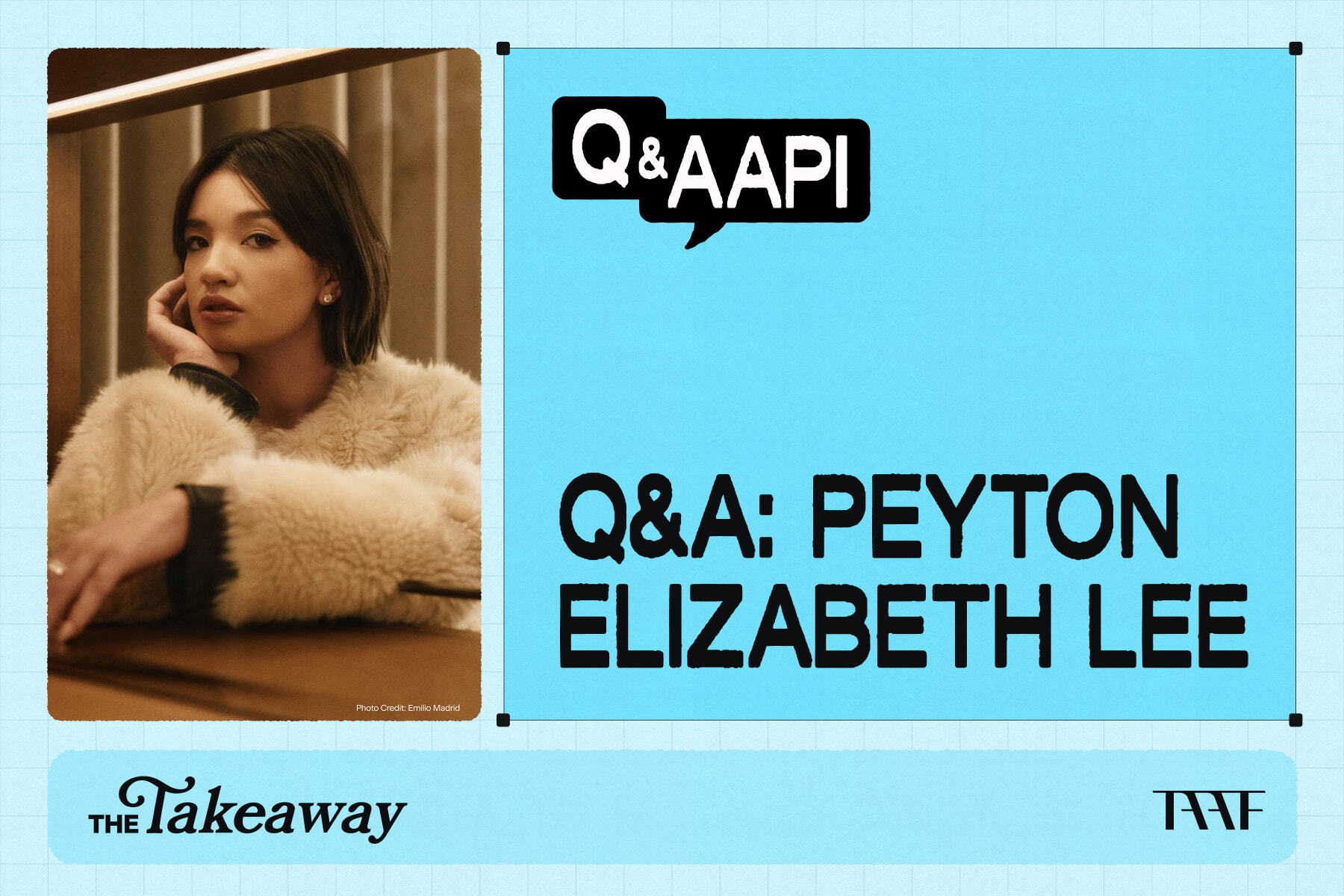
In this Q&A, we're spotlighting AAPI voices making an impact across entertainment, culture, and community. Each guest answers the same set of rapid-fire questions, giving you a glimpse into their personality, humor, and story. For our first installment we caught up with Peyton Elizabeth Lee, star of Wildwood.
TAAF's Asian+American campaign invites the AAPI community to reclaim its narratives and celebrate the duality of being both Asian AND American. Please describe yourself in 10 words or less.
I am an Asian American + actress + producer + friend + daughter + lover of fluffy creatures.
Can you remember an AAPI entertainer or public figure that had you starstruck as a kid? What made you look up to them?
I am a huge fan of Gemma Chan. I remember watching her in Crazy Rich Asians and being mesmerized. I wanted to be her. She’s so sophisticated and beautiful, but also just seems so kind. I’m not exactly a kid anymore, but I spent the majority of the Academy Museum Gala After Party just staring at her.
When was the first time you remember feeling represented onscreen or in a book or song?
I don’t know if the feeling was necessarily that I felt myself being represented, but I think when I saw Christina Yang in Grey’s Anatomy, it was one of the first times I saw an Asian woman on screen that I really aspired to be like. She wasn’t an amalgamation of the Asian stereotypes I had been socially conditioned to expect. She wasn’t quiet, or awkward, or uncomfortable in who she was. She was just brilliant, effortlessly sharp, wildly ambitious, and I wanted to be just like her.
What’s a piece of cultural knowledge or a skill passed down to you that’s your low-key superpower?
My father grew up in California pretty separated from his Chinese heritage, and so my cultural knowledge and skills are honestly limited. But I do feel like, having grown up Chinese and Irish/ Italian, while feeling very culturally American, I have an ability to approach people of all ethnic backgrounds with zero preconceived notions of their upbringing or experience, which I think has sometimes allowed me to understand people more deeply and accurately.
Pick three iconic AAPI women to be your aunties for a day out. Who’s coming, and where are you taking them?
I would take Lauren Tom, my fictional TV grandma and forever friend, Sandra Oh, and my great- grandmother, who I never got to meet, but I hear was an incredibly strong and inspiring woman. I would just take them to lunch and ask them questions for hours about their experiences and get some advice!
So many of our experiences are universal to the human condition and shouldn’t be put in a box of diverse stories or Asian stories, but simply the larger category of human stories.
What’s the biggest misconception your industry has about what AAPI audiences really want?
This is difficult because I don’t think I am qualified to speak on behalf of all AAPI audiences, but for me personally, I think there is a misconception that in order to tell a story about somebody that isn’t white, the story has to be about them not being white. And that, in order to promote diverse storytelling, we must primarily highlight the subject’s differences. I wish we had more of a commitment to normalizing diversity, incorporating it seamlessly into the stories we tell, rather than emphasizing it. So many of our experiences are universal to the human condition and shouldn’t be put in a box of diverse stories or Asian stories, but simply the larger category of human stories.
What AAPI stereotype are you SO over?
While there are ways in which I think we have made progress as it pertains to AAPI casting, I still feel like a lot of the Asian specific roles I go out for are manifestations of the same, tired, stereotypical idea of what an Asian girl in America is like. Hyper-academic, socially awkward, and living under the watchful eye of an emotionally one-dimensional tiger mom. We are so much more than that. Some of us are none of those things. And I want our on screen representations to reflect that.
You get to greenlight one movie about any moment or person in AAPI history. What story are you telling?
I think we need a movie about Alysa Liu. Her journey from being a figure skating prodigy, to retiring, to coming back and winning gold at the Olympics, in her own way, on her own terms, to music we all love, was so inspiring to watch unfold in real time. I think often excellence and having fun are seen as mutually exclusive. She laughed in the face of that idea. She’s incredible.
What does "finding your community" mean to you, and how long did it take you to find yours?
I think finding community is about discovering people to surround yourself with that feed your best qualities, encourage your best tendencies, embrace your imperfections, and find ways to lovingly challenge you to grow. And importantly, you are able to do the same for them. I don’t really have an answer for how long it took me to find my community, because I think it is an ongoing process. As I get older and more firmly settle into adulthood, I have realized the most valuable piece of any experience is the people you meet along the way. The relationships you develop that endure the passing phases of your life. That ground you in a greater sense of who you are and what truly matters.
What’s a piece of advice you’d give a young AAPI just starting out in your industry?
I would advise a young AAPI just starting out to relax into the timing of their life and career. I have spent, and still spend, far too much time worrying about how quickly I am getting to my goals. Comparing the speed at which my career has grown to that of others. It’s a losing game. And you miss out on so much joy and beauty in everyday life living that way. I think especially in this industry, the lack of security and stability, as well as the large amount of rejection, can be dejecting and overwhelming. But if you allow yourself to embrace the unknown, to believe that the jobs you don’t get weren’t meant for you, and to trust that with the right amount of hard work and commitment, you will get to where you want to go, the journey becomes a whole lot sweeter.
What’s the worst piece of advice you ever received that you’re glad you ignored?
The worst piece of advice I ever received was that I would never be a successful actress if I didn’t “speak Chinese or know karate.” What a crazy thing to say to a person. Now I wish I did speak Mandarin and Cantonese, and I wish I did know karate. But that’s beside the point.
Finally (and most importantly) what is your hottest, most unhinged food take?
The best dumplings are filled with chocolate.
Peyton Elizabeth Lee is an actress and producer with a dynamic career spanning film, television, voice acting, and producing. She has been named to Variety’s Youth Impact Report and The Hollywood
Reporter’s Top Stars Under 18 list. She voices Prue McKeel in the animated feature Wildwood, out in theaters now.